
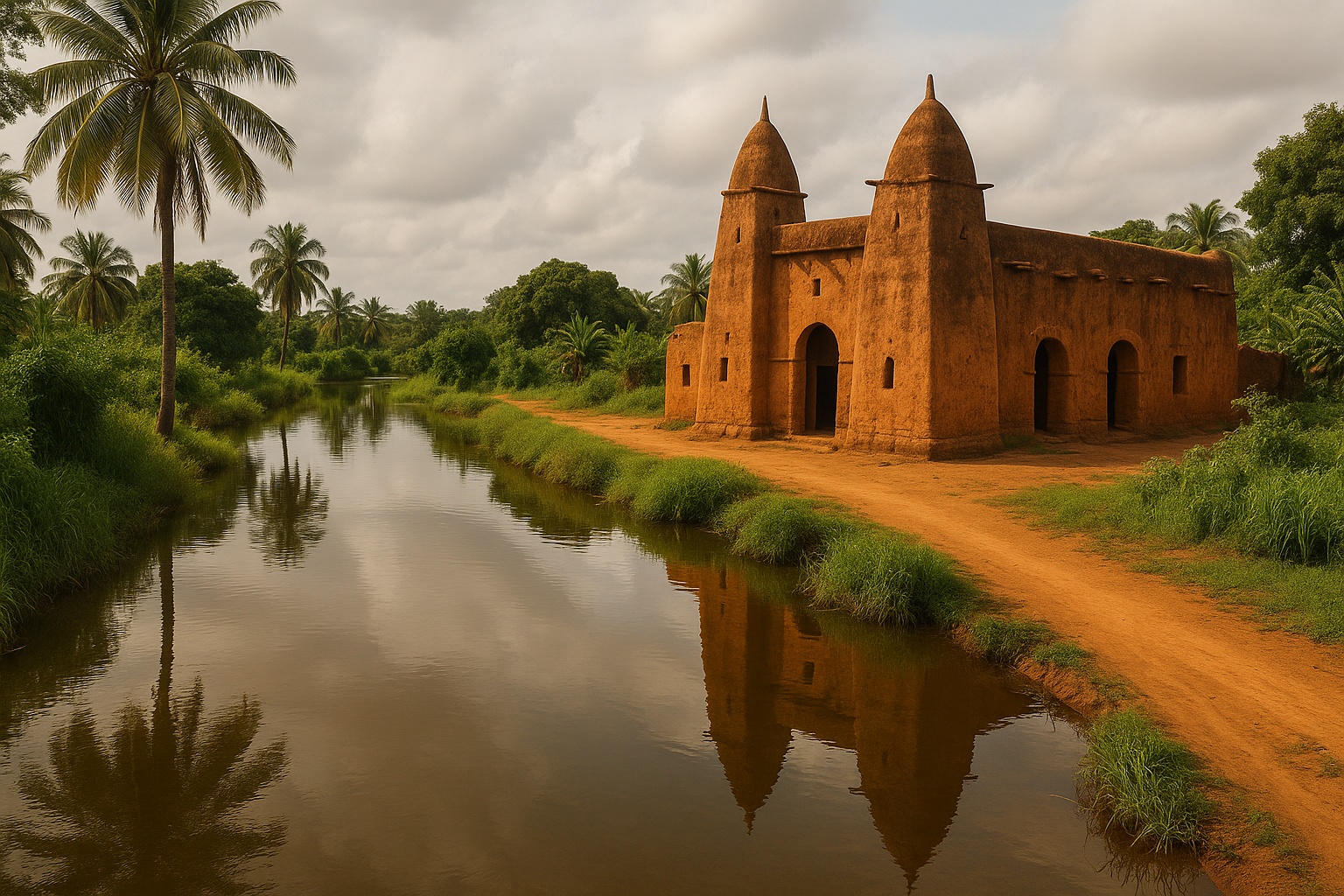
Benin

Short description
Autumn across Benin: short rains in the south, harvests in the north
From September to November Benin reads like two countries. Along the Gulf of Guinea the south slips into the short rainy season: heavy, predictable showers break late afternoons and the markets smell of wet earth and palm oil. Further inland the annual rains taper off in September, leaving millet and sorghum fields ready for harvest and evenings that cool noticeably after the heat of the wet months.
How moving around Benin actually feels
Distances look small on a map but travel takes longer than you expect: a coastal hour can stretch when zémidjans—motorbike taxis—thread through Cotonou’s lagoon-side traffic, and northbound journeys use taxi-brousse that stop frequently. The RNIE1 along the coast is the busiest artery; secondary roads to smaller towns are often patched and slow once the rains start. Cash in West African CFA francs rules outside main hotels and some Cotonou cafés; ATMs are reliable in cities but scarce in rural regions. French will open most doors, while Fon and Yoruba are the working languages of southern markets and Bariba or Dendi appear as you head north.
Everyday gestures, food and local rhythms
Begin conversations with a handshake and a brief exchange about family—that’s customary and expected even from strangers. Dress modestly in villages; shorts are common in coastal Cotonou but less so around sacred voodoo sites. Meals pivot around midday in many homes: a shared plate of maize dough or rice, plantain like alloco at street stalls, and snacks such as yovo doko sold hot from vendors. Akpan, a chilled fermented corn snack, shows up at market stalls when the air is thick after rain. Bargaining at markets is normal; being offered a small cup of palm-wine or a sachet of water is a frequent courtesy.
What visitors are usually surprised to find
People often arrive thinking Porto-Novo will be the hub; in practice Cotonou dominates transport, banking and nightlife. Voodoo is not a museum piece here but woven into daily life—shrines, drumming and annual rites are visible on ordinary streets. And because Benin is compact, you can shift from humid coast to open savannah in a single day, but expect that local timetables and road conditions will dictate how far you actually get in autumn.
Quick 5
Benin
Benin
Benin
Benin
Travel Requirements
What you need to enter Benin, for the passport you hold.