

Sao Tome and Principe
Short description
Sao Tome and Principe arrives as plantation islands and slow Atlantic towns
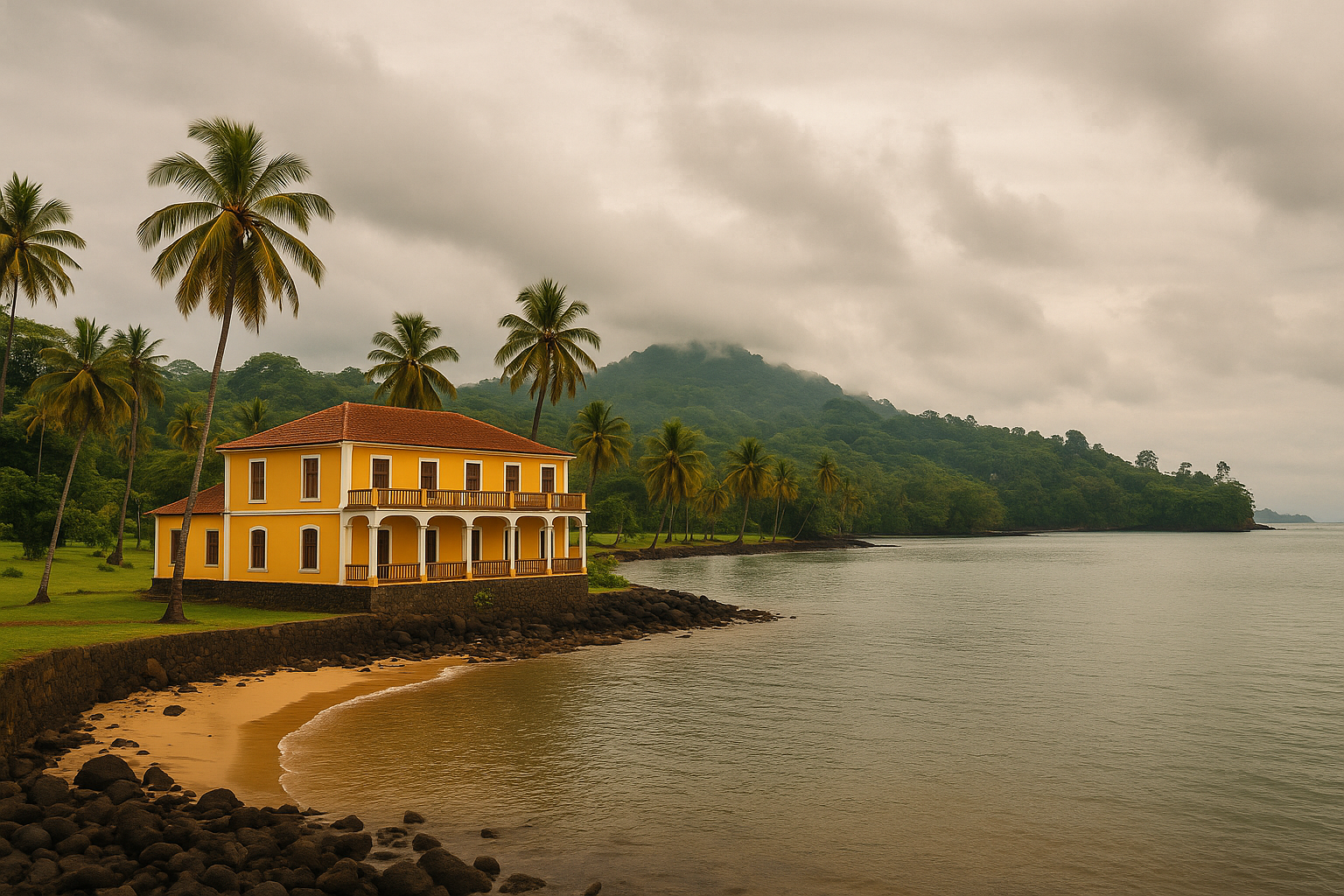
Sao Tome and Principe moves at the pace of cocoa drying floors and reef tides, where São Tomé town’s market and the compact settlements on Príncipe set the rhythm for the whole country.
Autumn here means the long rains returning to the volcanic interior
From September into November the weather shifts: September often still has drier days, but by October the rainforest trails and the old roças begin to take steady afternoon downpours that make rivers rise and cocoa pods bloom; those showers reshape transport, farm work and when locals plant or mend terraces.
Getting between beaches, plantations and peaks takes time and patience
Distances are short by map but slow in practice—many inland roads on São Tomé turn to mud in the autumn rains and hiring a 4x4 or a driver who knows the tracks is common; short domestic flights and irregular boat crossings link the two main islands, and schedules can change quickly when sea and cloud thicken.
Daily life, language and payment on the islands
Portuguese is the official language you’ll hear in government and shops, but Forro creole and island Portuguese dialects dominate conversation in villages and at roças; the currency is the West African CFA franc (XAF) and cash rules outside the capital—ATMs and card acceptance are concentrated in São Tomé town.
Food, hospitality and what first-time visitors misread
Meals in Sao Tome and Principe are anchored by fish, milho frito and duck rice, often shared at midday on a shaded veranda at a former cocoa estate; expect invitations to taste coffee or freshly opened fruit more than formal restaurant service in remote places. Many travellers arrive expecting a Portuguese resort feel and are surprised by how visible the plantation history is: crumbling roças sit beside restored guesthouses, and weekday life follows fishing schedules, church bells and market days more than a tourist timetable.
Quick 5
São Tome and Principe
São Tomé and Principe
São Tomé and Príncipe
São Tome and Principe
São Tomé and Príncipe
Regions

Travel Requirements
What you need to enter Sao Tome and Principe, for the passport you hold.
Places of interest
Landscapes in Sao Tome and Principe
Travel Tips