

Yemen
Short description
September brings the qat season into daily life
From September to November the blunt, green smell of qat marks the day: harvests begin in the cooler highlands and bundles arrive at markets and coffeehouses across the country. Morning light in Sana'a and the mountain towns is noticeably cooler than the long summer, and you’ll see men carrying qat sacks to shared chewing sessions that shape social rhythms more than any clock.
Autumn’s work on the land and in towns
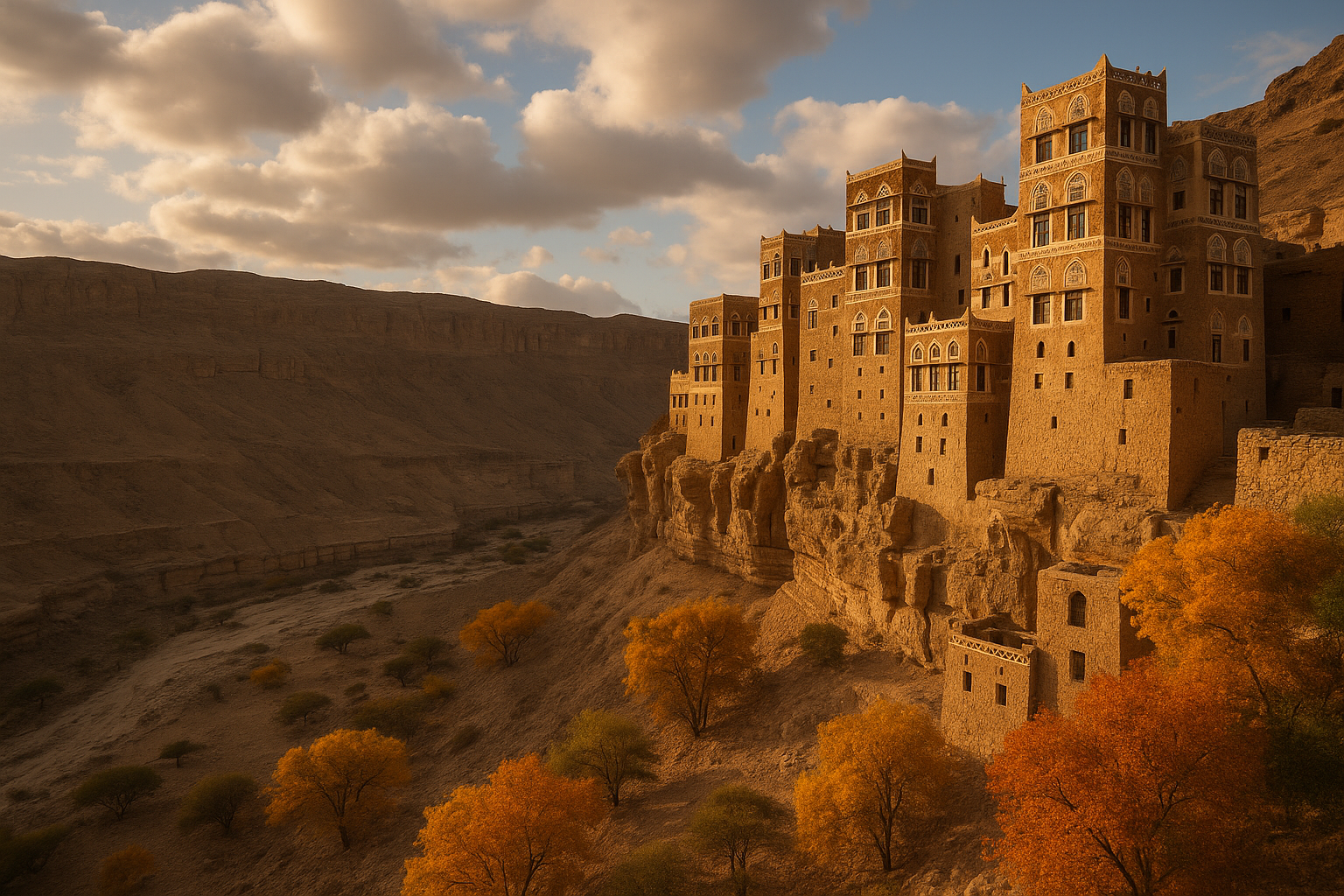
Autumn is when the highland terraces change pace — coffee growers are preparing or starting to pick cherries by late autumn, while terrace farmers finish summer grain and tend stone walls before the winter cold. On the coastal plain the last of the monsoon humidity fades, so ports and souqs clear of that heavy summer haze and coastal evenings become slightly less oppressive; inland, nights start to require a jacket.
How travel actually moves in Yemen in these months
Distances are deceptive: the country stretches north–south and mountain roads slow you far more than the mileage suggests. Expect journeys to take longer because of narrow passes, not because of traffic volume; shared minibuses and collective taxis remain the backbone of intercity travel, while scheduled flights exist but are limited and can be irregular. Cash in Yemeni rial is what people expect everywhere outside a few big hotels; card acceptance is rare. Mobile data works in cities and most towns, but signal drops on mountain routes, so plan for pockets of silence. Arabic, and local Yemeni dialects in particular, open the most doors — a few words go further than a translation app.
Daily manners, meals and small surprises
Hospitality shows itself through small rituals: you’ll be offered tea, coffee or dates soon after a greeting, and refusing repeatedly is taken as impolite. Saltah — the steaming stew with a local salsa called sahawiq — is the everyday, late-afternoon meal in many homes and worth accepting when offered. Dress conservatively in towns and around religious sites; public social life often revolves around family gatherings and qat circles rather than bars or late-night cafes. Travelers who expect only deserts often find instead complex mountain communities, a living coffee culture tied to the port of Mokha, and markets where everyday life still runs at an old, deliberate rhythm.
Quick 5
Yemen
Yemen
Yemen
Yemen
Yemen
Regions

Travel Requirements
What you need to enter Yemen, for the passport you hold.
Places of interest
Landscapes in Yemen
Travel Tips