
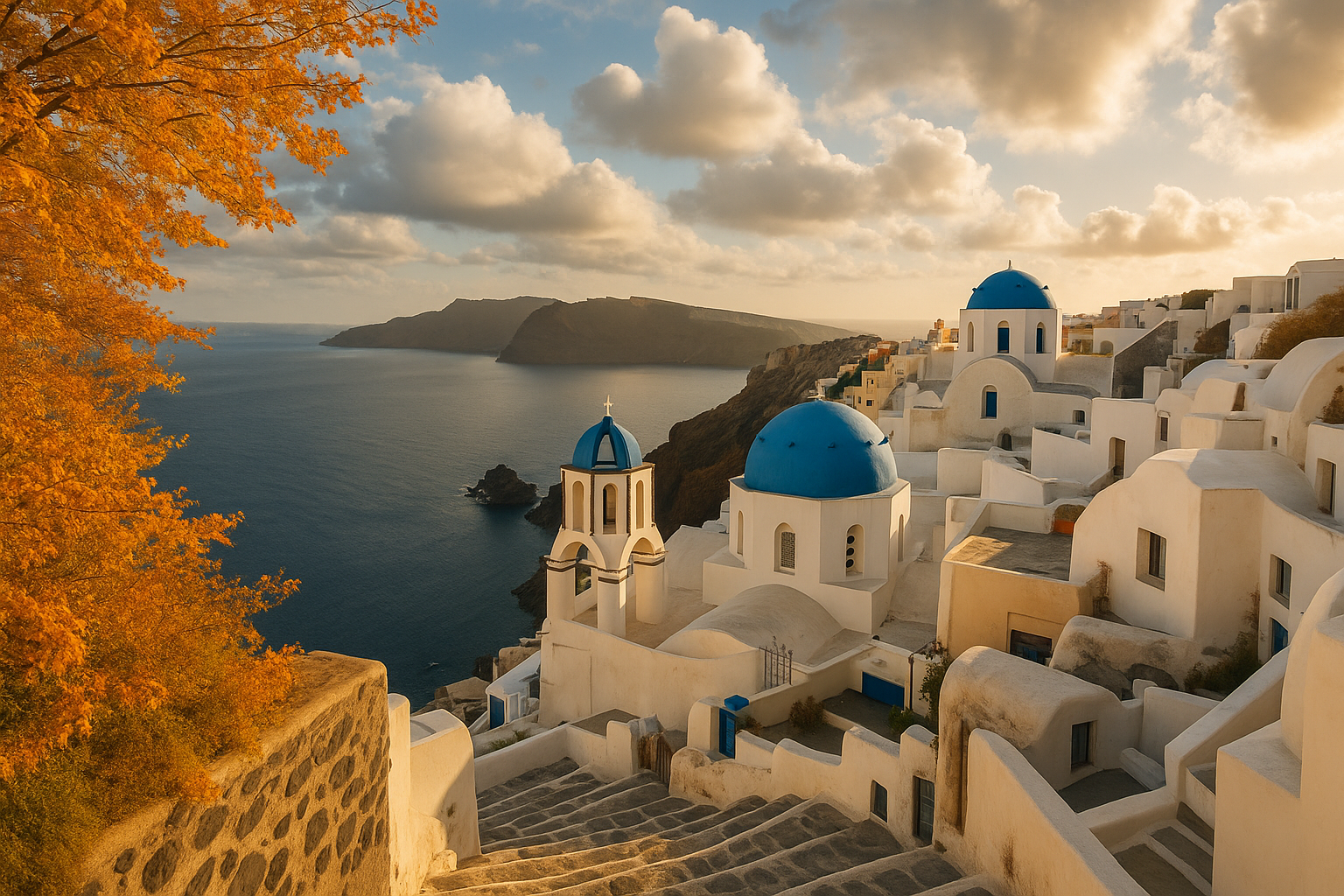

Greece
Short description
Autumn in Greece arrives with olive presses and emptier ferries
In Greece the first rains that matter fall on olive groves: from late September you’ll see nets spread under trees and trucks heading for presses in Kalamata, Messinia and Crete while the Aegean still holds heat from summer. Cities change pace too — Athens and Thessaloniki refill after August holidays, theatres and film festivals restart, and seaside towns trade crowded beach bars for cafés full of locals.
What the season actually does to the country
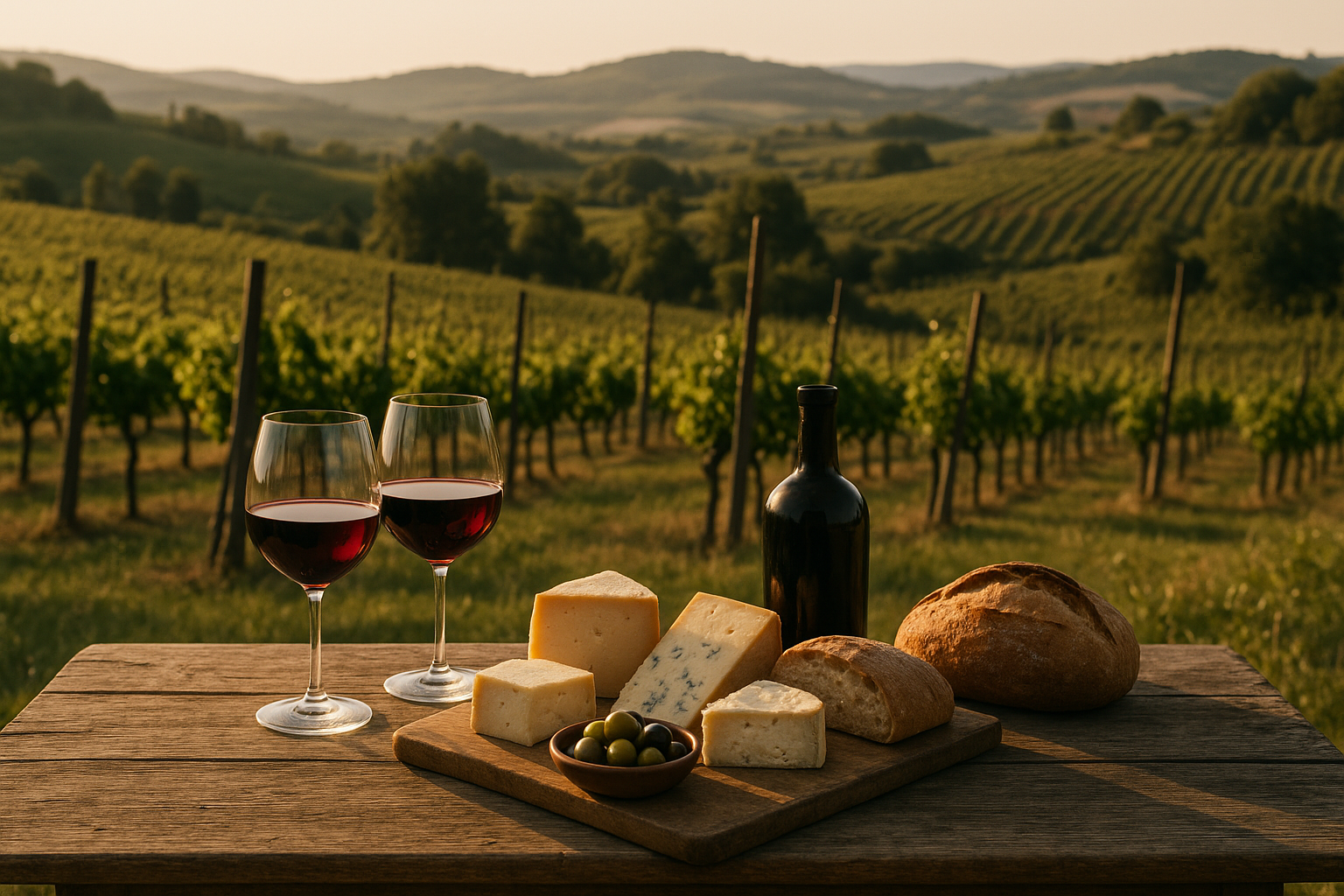
Autumn is harvest time: grape-vintage activity in vineyards of Nemea and Naoussa, chestnut-roasting in mountain villages of Pelion and Evia, and market stalls stacked with late tomatoes and figs. By November the northern mountains are cloudier and the weather can flip quickly, so island afternoons in September often feel like late summer while by late November you’ll need a jacket for winds off the Ionian.
Getting around when connections thin out
Ferry timetables taper after early September; some smaller Cycladic islands drop to a few sailings a week and winter schedules can be sparse, so plan inter-island hops with buffer days or fly to hubs served by frequent domestic routes. Long-distance travel on the mainland is mainly by KTEL coaches and regional trains — a coastal drive may be short in kilometres but slow on mountainous roads. Card acceptance is widespread in cities and larger islands, but family-run tavernas and village shops still prefer euros in cash.
Daily rhythms, food and the courtesies you’ll use first
Meals stay social: lunch remains the midday anchor in villages, while dinner in towns often begins after 9pm though families eat earlier in autumn. Expect to be offered a small glass of tsipouro or a plate to share at a table; refusing politely is fine, accepting marks you as part of the circle. People greet friends with two cheek-kisses; business encounters start with handshakes. If you visit a monastery, note the strict modest-dress rules and that Mount Athos still restricts access to men only.
Quick 5
Greece
Greece
Greece
Greece
Greece
Regions

Travel Requirements
What you need to enter Greece, for the passport you hold.
Places of interest
Landscapes in Greece
Travel Tips