

Nauru
Short description
A coastbound population and a pitted centre
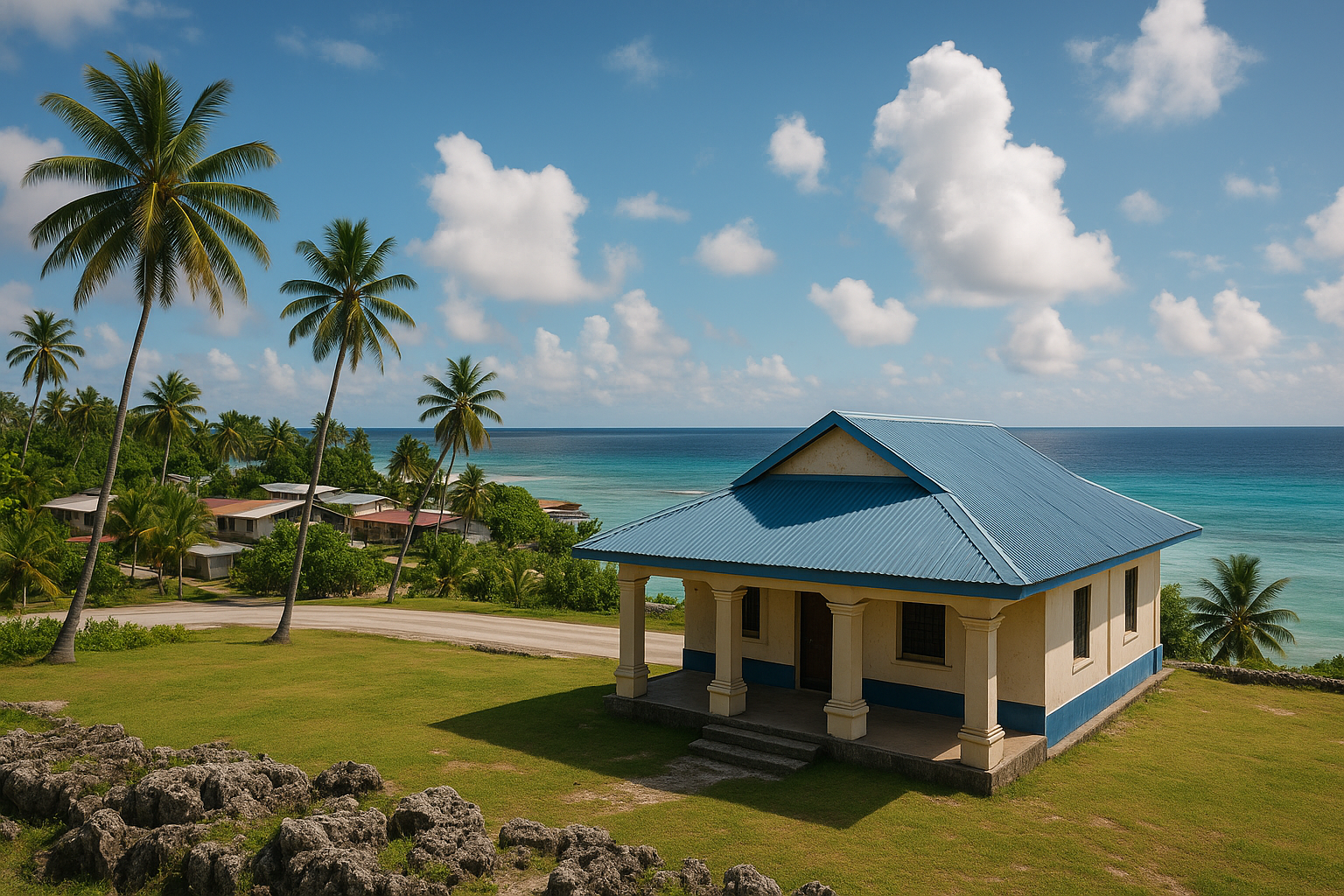
Most of Nauru’s roughly ten thousand residents live on the narrow coastal belt that rings a high, pockmarked interior known locally as Topside — the islands’ scars from decades of phosphate mining are the feature you notice first. Life unfurls along a single main road that runs around the shore; beyond it are the jagged terraces and sinkholes of the worked plateau, a landscape that makes the island feel both very small and unexpectedly rugged at once.
Autumn here: the dry tail and the approaching squalls
In September and October Nauru still carries the relative dryness of the long season that runs through most of the year; humidity is lower, lagoons are calm and daytime temperatures stay steady. By November the northwest monsoon influence returns and afternoons can bring sudden heavy showers and wind squalls — not a full wet season yet, but the air shifts and mosquitoes become more noticeable. That change alters the rhythm: outdoor socialising in late autumn moves earlier in the day, sea breezes matter again, and any low-lying paths grow slick fast.
How getting around and staying connected actually works
Distances are deceptive because the island is tiny — trips that look long on a map are usually under an hour. There’s one airport by Yaren with a small number of scheduled flights, and Nauru Airlines is the regular carrier; international connections are infrequent, so timetables shape itineraries. Local transport is informal: a few taxis, hire cars, and bicycles dominate; organized public transit is essentially absent. The currency in use is the Australian dollar; larger shops and hotels accept cards but many neighbourhood vendors prefer cash. Expect mobile reception to be patchy outside the main settlements and rely on hotel Wi‑Fi for heavier data needs.
Daily rhythms, food and what surprises visitors
Church services and family gatherings anchor the week — Sundays feel especially settled, with many businesses closed and community life conspiring around church routines. English is widely understood alongside Nauruan, so basic conversation is straightforward. Meals tend to be centred on fish, coconut and taro; local specialties you’ll encounter include fish stew, cuscus and taro dishes served casually rather than on formal menus. New visitors are often surprised at how quickly they become noticed: with such a small population strangers don’t blend in, and hospitality takes the practical form of quick invitations and many questions rather than formal ceremonies.
Quick 5
Nauru
Nauru
Nauru
Nauru
Nauru
Regions

Travel Requirements
What you need to enter Nauru, for the passport you hold.
Places of interest
Landscapes in Nauru
Travel Tips