
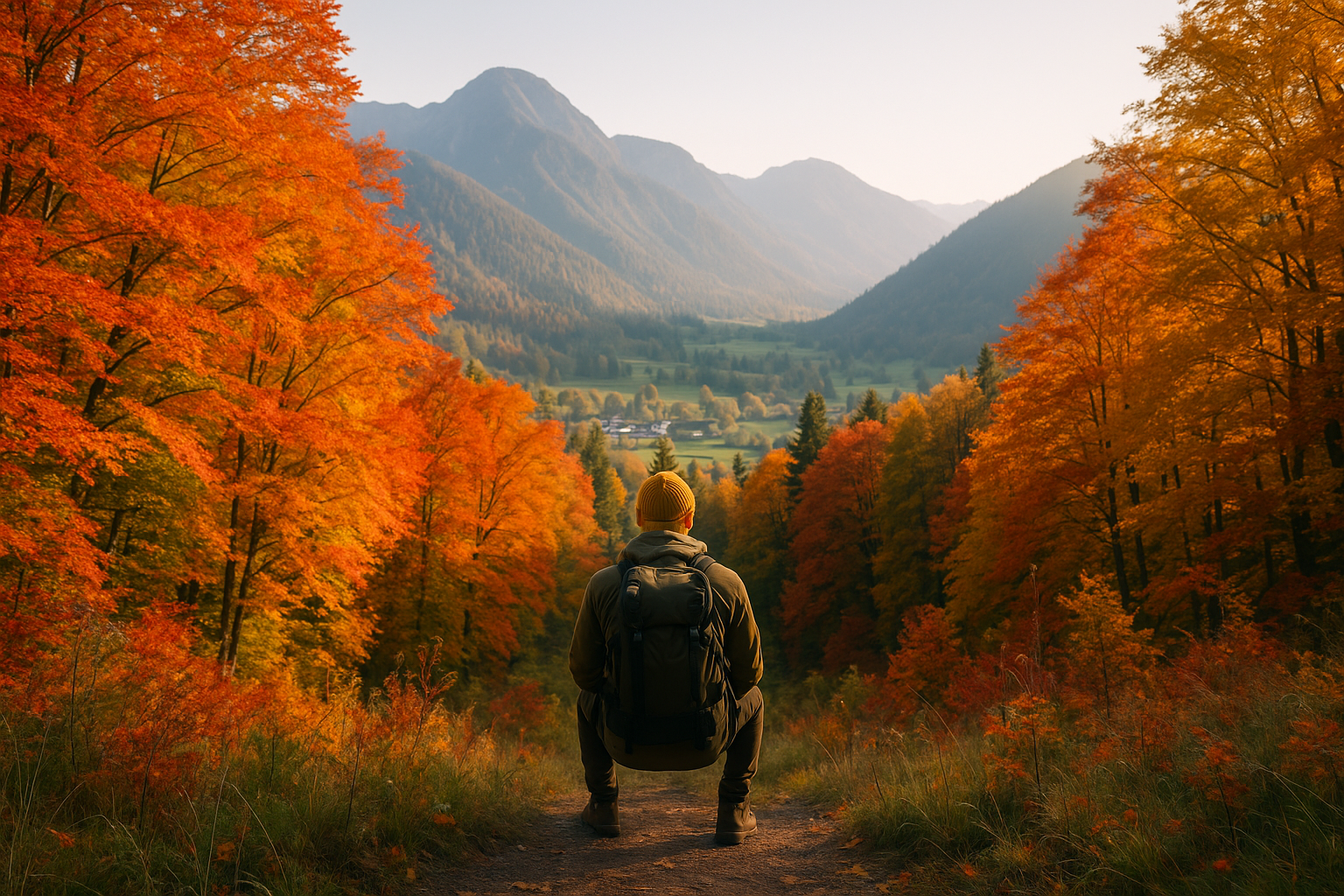
Why go in autumn
Why travel in autumn? Autumn is a classic shoulder season: school-holiday crowds thin out, many prices fall from peak-summer levels, and temperatures are often comfortable for walking and sightseeing. Coastal water can stay warm into September–October in many temperate regions, while mountains and forests put on strong colour displays and food harvests come into full swing.
Autumn gives you big colours, fewer crowds and better value — but plan for shorter days and changeable weather.
When is autumn
When people mean "autumn" they usually mean September–November in the northern hemisphere and March–May in the southern hemisphere. That timing matters for foliage, festivals and the last chance for warm-sea swims in temperate zones.
Things to do
What to do in autumn — pick from foliage trips, food-focused travel (harvests, food festivals, markets), wine and olive seasons, mushroom and truffle outings, wildlife events (migrations, deer rut), city breaks with fewer tourists, and hiking before winter closures. Many outdoor activities feel easier without midsummer heat or high-season crowds.
Foliage timing
- Peaks move: foliage and harvest peaks travel from higher latitudes and altitudes toward lower latitudes and valleys—check local timing rather than assuming a single "best week".
- Mountains first: colours and early snow arrive earlier at altitude than in lowlands.
- Local reports: follow park services, regional tourism sites or local photographers for up-to-date timing.
Harvests and food
Weather risks
Weather and seasonal risks — days shorten quickly, so daylight for walking and sightseeing falls. Expect first autumn storms and wet spells in many regions, and remember some tropical areas still face hurricane or typhoon risk until around November. Mountain areas can see early snow; seasonal ferries, cable cars and mountain huts often reduce service or close in October—always check opening dates and timetables before you travel.
Packing checklist
Footwear and gear
Footwear & small gear — use waterproof shoes rather than light trainers if you expect mud or wet weather. Consider gaiters where trails are muddy or wet. If there's any chance of ice or hard-packed snow on higher routes, pack microspikes or crampon-compatible footwear and know how to use them. A small repair kit (duct tape, safety pins, a multi-tool) and quick-dry towel are useful.
Hiking safety
Hiking and daylight planning — check sunrise and sunset times for each day and choose routes you can complete in that available daylight plus a safety buffer. Add at least 20–30% extra time for muddy ground, navigation or stops. Start hikes early, carry a map and compass or an offline GPS track, and leave your route and expected return time with someone.
Dos and don'ts
Booking tips
Photography tips
Photography tips for autumn colours — overcast light reduces harsh contrast and often makes colours look richer; use it rather than avoiding cloudy days. Aim for golden hour for warm side-lighting and long shadows. Look for reflections in still water to double the colour effect. A polarising filter reduces glare on leaves and water and can deepen skies. Expose for midtones or bracket shots in tricky light, and shoot RAW if you can for easier colour recovery in editing. Include foreground elements to give scale to wide landscapes.