
What jet lag is and why east is harder
Jet lag is the mismatch between your internal body clock (circadian rhythm) and the local time at your destination. Symptoms include tiredness, trouble sleeping, reduced concentration, and digestive disruption.
Going east is usually harder than going west because you must advance your internal clock (go to sleep earlier), which is physiologically tougher than delaying it (staying up later) when you travel west.
Daylight is your strongest jet-lag cure—use morning light after eastward flights and afternoon light after westward ones.
How fast your body adjusts
Rule of thumb: without targeted help your body typically adjusts by about one time zone per day. You can speed this up with light exposure, sleep timing and strategic caffeine or short-term melatonin, but expect gradual change.
Preparing in the days before travel
Before the flight, shift your sleep by about 1 hour per day for 2–3 days toward the destination time (earlier for eastward travel, later for westward). Don't try a big immediate change the night before—small steps stick.
Arrive well rested if you can: a short period of good sleep before travel reduces sensitivity to jet lag. When booking, prefer flights that land in the late afternoon or evening if you can get to bed that night on local time.
Pack and bring for the flight
Practical in-flight behaviour
On the plane, set your watch to destination time as soon as you board and try to sleep or stay awake according to that clock. This simple mental cue helps you sync behaviour to the new time zone.
Hydrate regularly, move and stretch at least every 1–2 hours to reduce stiffness and improve circulation, and limit alcohol and excessive caffeine—both disrupt sleep and dehydrate.
In-flight sleep tactics
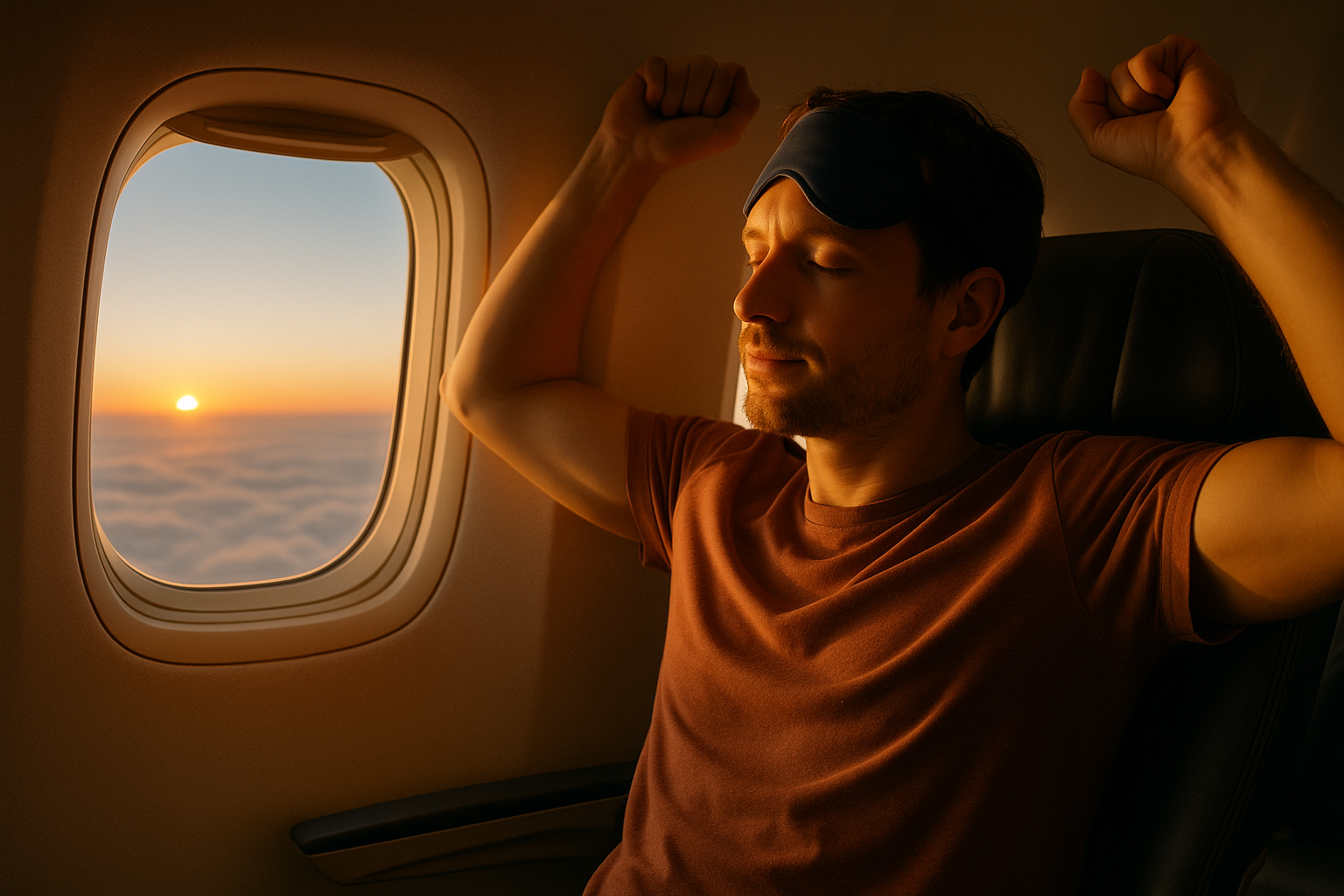
If you plan to sleep on the plane, use an eye mask, earplugs, and a comfortable neck position. Keep naps short if they are just to get through the flight—long in-flight naps can make the first night harder.
If you must use a sleep aid, do a trial at home first so you know how it affects you and never combine sedatives with alcohol.
Light exposure on arrival
Sunlight is the most powerful signal for resetting your clock. After an eastward flight seek morning light to advance your body clock; after a westward flight seek late afternoon or early evening light to delay it.
If you need to avoid light (for example to fall asleep earlier), use sunglasses, a hat and shade strategically; if you need light exposure, get outside rather than relying on indoor lighting where possible.
Day-by-day checklist
Caffeine and naps
Use caffeine strategically for daytime alertness: a single dose can help you stay awake at the destination, but avoid caffeine within about 6–8 hours of your planned bedtime because it can delay sleep onset and fragment sleep.
If you need to nap, a brief nap (20–30 minutes) can restore alertness without wrecking the first night—keep naps early in the day.
Melatonin and sleep aids
Some travellers use low-dose melatonin short-term to help shift sleep timing; it can be useful for advancing sleep on eastward trips or helping with first-night sleep. Rules, availability and recommended doses vary by country and person.
Talk to a doctor or pharmacist before trying melatonin or prescription sleep aids—especially if you take other medications, have a medical condition, or will need to be alert the next day. Never operate vehicles or heavy machinery after taking sedatives.
Kids, short trips and returning home
Children often show their jet lag in mood and appetite, not just tiredness. They can adapt faster than adults but need routine: keep mealtimes consistent with local time, use sunlight and short naps, and avoid forcing a strict new schedule immediately.
When returning home, apply the same principles in reverse: use light at the time that helps you shift back, keep the first day low-key and expect a day or two to re-adjust. For very short trips (1–2 days) it is often easier to stay on your home schedule than to shuffle your clock twice.