How much connection time you need depends on whether flights are domestic or international, whether you must change terminals, and whether luggage checks or separate tickets are involved.
Rule of thumb: 2 hours+ for international connections; allow 3 hours+ if you must change terminals, re‑check bags, or you’re on separate tickets.
For short domestic connections within the same terminal 45–90 minutes can be enough, but check the airline’s minimum connection time for that airport.
Always add extra buffer for peak times, long immigration queues, or if you need special assistance.
If you have fewer than six clear hours, usually stay airside; six or more often makes leaving the airport worth it.
Protected connections vs self-transfer
Protected connectionAirline-issued transfer where carrier accepts responsibility for missed onward flight; they rebook you and usually reissue bags if checked through.
Self-transfer (separate tickets)You are responsible for missed connections; you must clear immigration, collect and re-check bags, and buy a new ticket if you miss the next flight.
Who paysIf you booked a single itinerary, the airline usually covers rebooking; on separate tickets, the cost usually falls on you unless travel insurance or the airline explicitly agrees otherwise.
Before you book separate ticketsallow generous time, confirm baggage rules, and check visa/transit requirements for both arrivals and departures.
Leaving the airport — when it’s worth it
Deciding whether to leave the airport: a simple formula helps. Subtract time for immigration on arrival, transport each way, and allow returning 2–3 hours before your next departure (more for long‑haul). If the remaining free time is less than about 6 hours, you’ll often be better off staying airside.
Factor in bag status: if your bags are checked through to the final destination you can leave, but if you must reclaim and recheck them you'll need extra time and possibly a visa.
Transit visas & passport rules
Transit visa requiredCheck the destination country’s official government site and your airline — some countries require a transit visa even if you stay airside.
Passport validityMany places require a minimum passport validity (e.g., six months) — verify the rule that applies to your nationality and each stop.
Airside transit still can need paperworkDon’t assume 'airside' means visa-free everywhere; confirm before you travel.
Visa-free transit programsSome hubs offer short-arrival visa waivers or escorted city tours — check the airport or immigration website for eligibility and registration.
Luggage: checked-through or self-transfer
Luggage plans change everything. If your itinerary is on one ticket and the airline checks bags through, you usually don’t see them until your final destination. If you booked separate tickets, expect to collect and recheck baggage.
Look for official baggage information on your booking confirmation and the airline website; at the airport, use transfer desks for through-checked bags. Many airports have left-luggage lockers or baggage storage near arrivals — useful if you want to leave the airport for a few hours.
What to keep in your cabin bag
Passport, boarding passes and any visaskeep these in a secure, easy-to-reach pocket.
Medication and prescriptionscarry all meds in your hand luggage in original packaging.
Phone, charger and power bankportable charger rated for flights and the right adaptors.
A change of clothes and basic toiletries1 small set to freshen up if luggage is delayed.
Valuableselectronics, jewelry and documents — never in checked luggage.
Sleep kiteye mask, earplugs, light blanket or travel scarf.
•Cash and at least one card in different places; printed copies of reservations and travel insurance policy number.
Sleeping at the airport
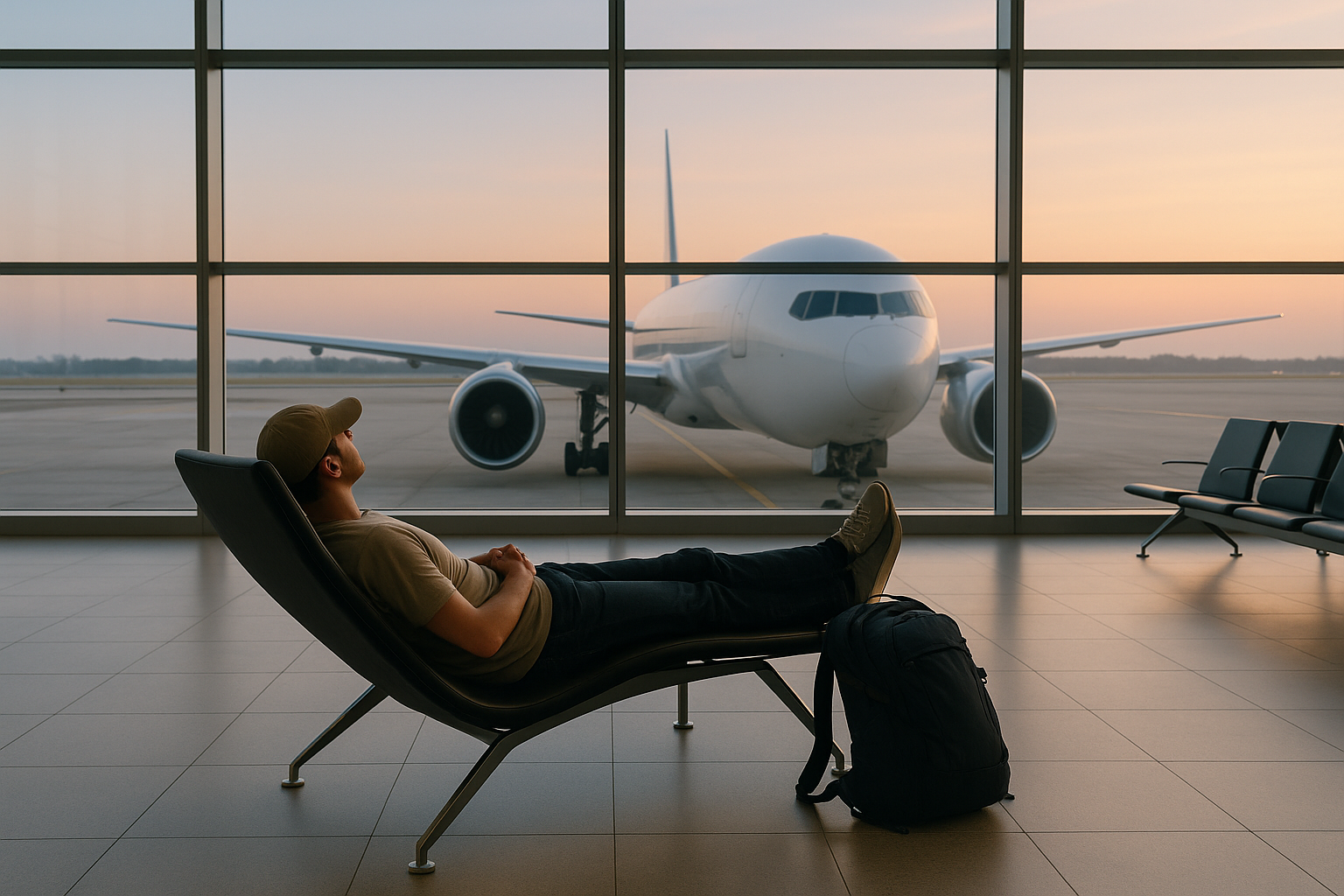
Sleeping in airports is common but varies by airport rules and comfort. Look for transit hotels, pay-by-the-hour sleep pods, or airport lounges that sell day passes. Many large hubs have 'quiet zones' or designated rest areas.
Basic safety and comfort: pick a well‑lit area near staff or security, keep valuables attached to you, set at least two alarms (phone + watch), and use an eye mask and good earplugs. If you plan to sleep on the floor, use a travel mat or thick layers of clothing.
Staying comfortable during a long layover
Hydratecarry a refillable water bottle and fill it after security.
Showermany lounges and some public facilities offer showers — a quick shower resets you better than coffee.
Walk and stretchlong layovers are a chance to move to avoid cramped muscles and jet lag.
Eat a real mealavoid too much junk food — a balanced meal helps energy and sleep later.
Charge upfind gate charging points or use a lounge to recharge devices.
Comfort kitlayers, socks, travel pillow and earplugs make a big difference.
Dos and don'ts
Do
Ask the transfer desk or airline staff for rebooking and meal/accommodation vouchers if your connection is their responsibility.
Check airport and airline websites or apps for lounges, showers and transit hotel availability and book in advance if possible.
Keep all boarding passes, receipts and correspondence if you expect to claim expenses or insurance.
Set alarms, make backups of travel documents, and tell someone trusted your plans for long overnight stays.
Don't
Assume separate tickets are covered by the airline — they usually aren’t.
Leave valuables unattended while you nap or shower.
Ignore visa/transit rules because you feel 'just for a few hours' — penalties or denial of entry can follow.
Spend all your buffer time on shopping near security; always allow to be at the gate early.
Free and cheap activities
Free and cheap things to do depend on the airport. Common options include observation decks, public art installations, short museum exhibits, and self-guided walking routes. Some airports and cities run supervised short city tours for transit passengers — check the airport’s official site for registration and eligibility.
Use airport maps to find exhibitions, play areas, or gardens. If you plan to leave the airport, buy a day transit ticket and plan a short, reliable activity (a single museum or a coffee district) rather than trying to do too much.
If a flight is delayed or you miss a connection
•Go to the airline transfer desk or gate as soon as you know you’ll miss a connection; show e-tickets and explain your onward flight.
•Keep receipts for food, accommodation and transport — insurers and some airlines require them for reimbursement.
•Know applicable passenger rights (e.g., delayed/denied boarding rules where they apply) and reference them, but don’t expect identical rules worldwide.
•If on separate tickets, contact your travel insurer and the airlines immediately; you will often need to buy the next flight and claim later if covered.
•If rebooking is needed, ask about meal vouchers, hotel accommodation and transport — entitlement depends on who is responsible for the missed connection.
Overnight layover quick checklist
•Passport, visas and boarding passes — keep them accessible
•Phone, charger, power bank and local SIM or roaming ready
•Medication and a small first-aid kit
•Cash and cards in separate pockets
•Earplugs, eye mask and travel pillow
•Change of clothes and basic toiletries in case checked luggage is delayed
•Copy/photo of passport and insurance details stored offline
•Set alarms and notify someone of your layover plan
•Check baggage status and transfer desk location on arrival
Final quick rules
Quick final rules: check transit and visa rules before you book, choose longer buffers when tickets are separate, keep essentials in your cabin bag, and use lounges or transit hotels when you need rest or privacy. When in doubt, ask airline staff on arrival — they’ll tell you whether your connection is protected and what you need to do.
Read next
PreviewWorld of Regions is in development — hotels, prices and content are sample data.