
Money abroad
Before you goWhile you're there

Money abroad

AppliesBefore you go
Read4 min

Quick start

Before you leave, decide how you will pay and make a short plan. Tell your bank if their system requires travel notifications or if you often travel to avoid automated blocks. Gather at least two payment methods (cards or card + cash) and store emergency contact numbers offline.

Carry a small amount of local cash for arrival expenses (taxi, tip, vending machines) and download the bank and currency apps you’ll need while away.

Always choose to pay in the local currency — Dynamic Currency Conversion is a hidden tax that can add several percent to the bill.

Pre-trip checklist

Tell your bankNotify via app or phone if required and confirm how they handle foreign transactions.
Check feesLook up each card’s foreign transaction fee and ATM fee in the bank’s terms or app.
Pack two cardsBring cards on different networks (Visa and Mastercard) and keep them apart.
Record block numbersSave card-blocking/phone numbers offline in case your phone dies.
Download appsBank app, currency converter, and an expense-tracking app (with offline mode if possible).
Bring some cashA small local-currency float for the first few hours after arrival.

Cards vs cash

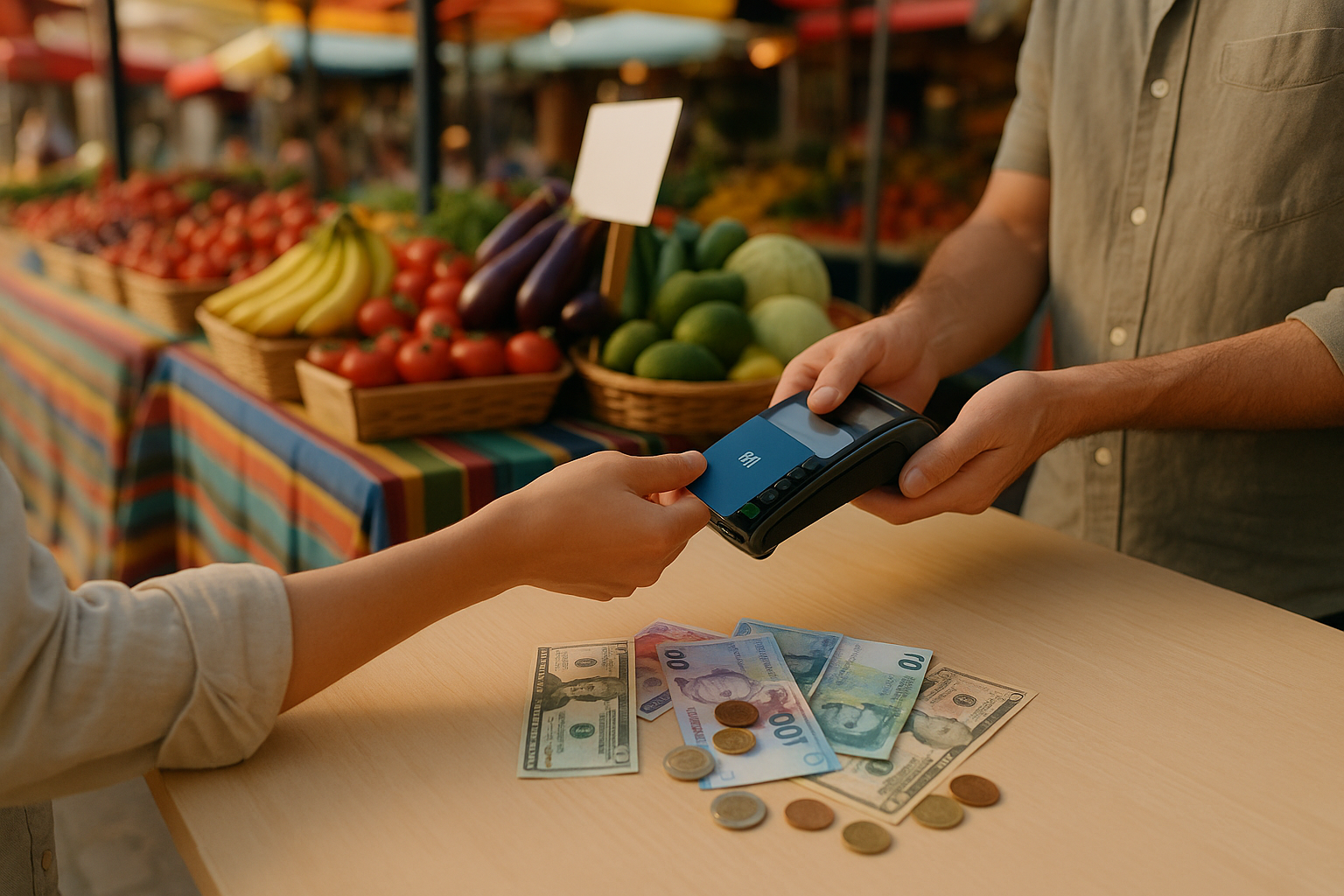
Cards are widely accepted in cities, hotels, and larger shops; contactless and mobile wallets (Apple/Google/Samsung Pay) work where terminals are modern. Cash remains essential for markets, small cafés, taxis (in many places), rural areas and tipping in some cultures.

Always choose to pay in the local currency at tills and ATMs. If a merchant offers to charge you in your home currency (Dynamic Currency Conversion), decline — it typically costs an extra few percent (commonly quoted 3–12%).

Which cards to carry

Primary credit cardUse for purchases where you want purchase protection and good exchange handling.
Debit card for ATMsLink to your checking account; know daily withdrawal limits.
Backup cardA different network (Visa vs Mastercard) kept in a separate place.
Prepaid/multi-currency cardConsider if you want to pre-load funds or avoid exchange exposure.
CashSmall notes for immediate or cash-only situations; don’t rely on cash alone.

Using ATMs

Use ATMs inside bank branches or busy malls where possible — they tend to be safer and less likely to charge outrageous fees. Avoid standalone tourist ATMs that display high fees.

Cover the PIN when you type it and inspect the card slot for skimming devices. To reduce fixed-per-withdrawal ATM fees, withdraw larger amounts less often, but balance that against safety and daily limits.

Currency exchange

Avoid airport and hotel exchange desks unless you have no other option — their buy/sell spread is usually wide. Compare the offered rate to a live mid-market rate (check Google, XE or OANDA) to spot bad deals.

Never exchange money on the street. Always take a receipt that shows the rate, commission and the amount of local currency you received.

How to spot a bad exchange rate

Big spreadThe 'we buy' and 'we sell' rates are far apart.
Rate out of lineThe quoted rate is much worse than the Google/XE mid-market rate.
Hidden commissionA separate commission line or a vague 'service fee'.
No receiptThey refuse to give a printed breakdown or receipt.
Street exchangerAnyone on the street offering a deal is risky and should be avoided.

Budgeting and hidden costs

Plan a daily budget and track purchases with an app or a simple spreadsheet. Factor in tourist taxes, service charges and small extras like city-entrance fees and deposit/hold amounts (hotels and rental cars often place holds larger than the final bill).

Keep an eye on card holds; they reduce your available balance until released, which can be several days after checkout or return of the car.

Hidden fees to watch for

Dynamic Currency ConversionMerchant offers to charge in your home currency; decline.
Foreign transaction feeA percentage added by some banks on each foreign purchase.
ATM flat feeA fixed amount charged per cash withdrawal.
Merchant card feeSmall businesses sometimes add a 'card fee' on top of the bill.
Card hold/pre-authorisationTemporary block on funds for hotels and rentals.

Scams and theft

Be alert for common scams: card skimming at ATMs, fake notes or short-change tricks in busy markets, distraction scams (a 'free' gift to distract you while an accomplice takes your wallet), and pickpockets in crowded places.

If a card is lost or stolen: block it immediately (use the bank app or the emergency number you stored), request a replacement, use your backup card, and report the theft to local police if required for insurance. Change online banking passwords and watch statements for unauthorised transactions.

Do's and Don'ts

Do
Tell your bank your travel dates and destinations
Carry two cards on different networks and store them separately
Always pay in the local currency; decline DCC
Use ATMs inside banks or secure locations and cover your PIN
Keep digital and paper copies of important documents
Don't
Don't accept Dynamic Currency Conversion at a till or ATM
Don't use street money changers or airport/hotel exchange desks if you can avoid them
Don't keep all cards and cash in the same place
Don't ignore small fees — they add up over a trip
Don't flash large sums of cash in public

Emergency money plan

Backup cardA second card kept separate from your wallet for emergencies
Hidden cashSmall stash of major-currency notes (USD or EUR) tucked away in case cards fail
Digital copiesScans/photos of passport, cards and important receipts stored in cloud and offline
Emergency numbersCard-block and bank contact numbers written down where you can reach them
Trusted contactOne person at home who knows your itinerary and how to help if needed
Read next
PreviewWorld of Regions is in development — hotels, prices and content are sample data.