
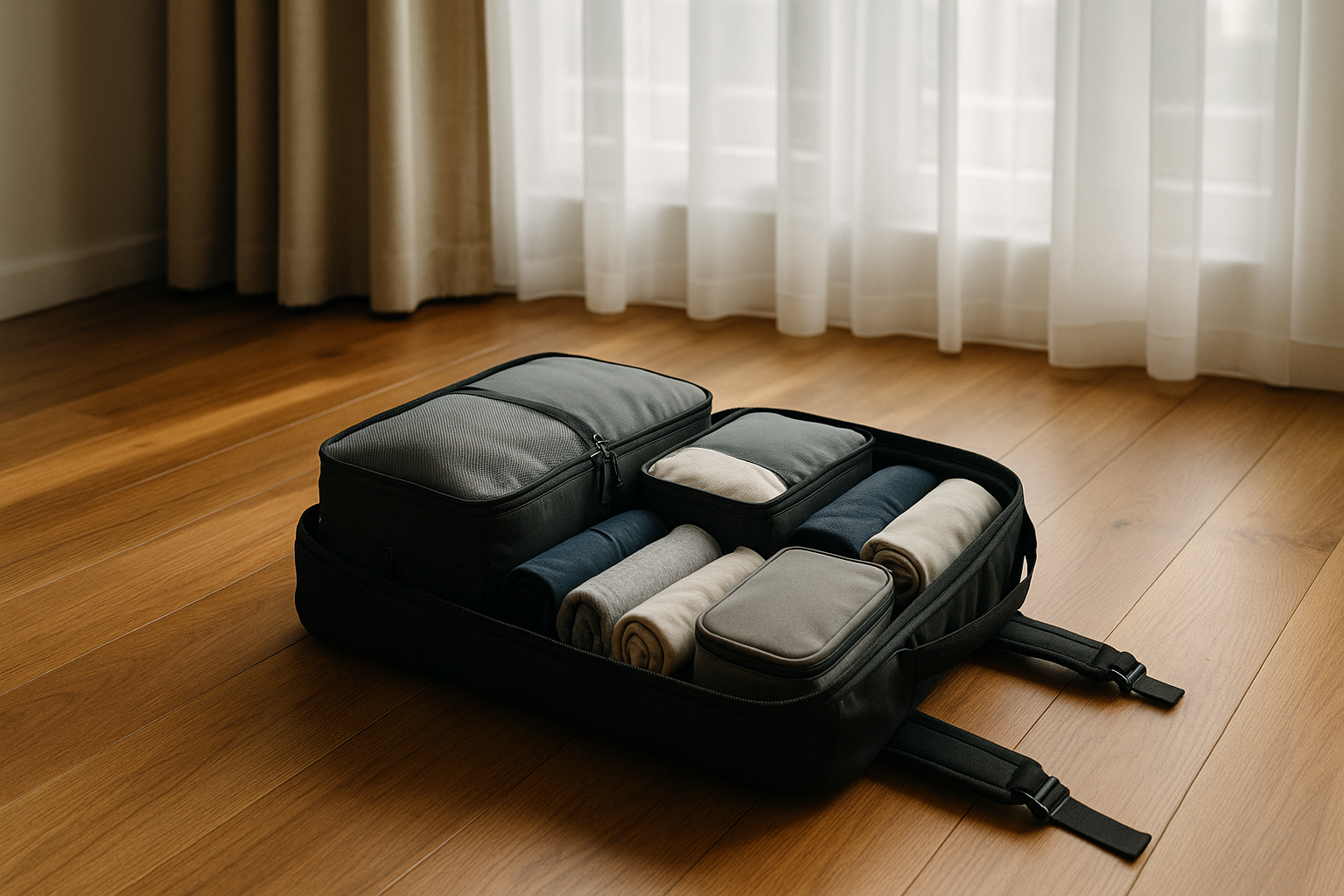
Can I really travel carry-on only?
Yes — for trips from about 3 days up to 3 weeks most people can manage with carry-on only. Benefits: no checked-bag delays or fees, faster exits at your arrival airport and fewer lost-bag headaches. It’s not worth it if you need bulky or specialised gear (sports equipment, medical devices), many formal outfits, or if your airline’s cabin limits are tiny—check before you book.
You can pack three weeks into a 30–40 litre carry-on if you plan outfits, do laundry and wear your bulkiest items on the plane.
Airline size and weight limits
Airline rules vary. Typical cabin-bag examples: around 55×40×20 cm and 7–10 kg for a main cabin bag, plus a personal item roughly 40×30×20 cm that fits under the seat. Low-cost carriers often enforce both size and weight strictly.
Always check your airline’s published dimensions and weight limit and weigh your packed bag at home on a luggage scale. Measure external dimensions with handles and wheels extended—those count.
Choosing the bag
Capsule wardrobe and outfit counts
Use a capsule wardrobe: neutral colours so everything mixes and matches. For one week, a useful baseline is 3 tops, 2 bottoms, 1 light-to-medium layer, and 1–2 sets of underwear per day (you’ll wash). For 2–3 weeks, repeat that set and plan at least one laundry session every 5–7 days.
Choose quick-dry, wrinkle-resistant fabrics (merino, synthetic blends). Wear your bulkiest layer and heaviest shoes on the plane to save bag space and weight.
Packing techniques
Toiletries and liquids rules
Liquids: most airports follow the 100 ml container rule placed in a single clear 1-litre resealable bag for carry-on. Some airports and airlines have updated security scanners that allow larger containers — check current guidance for your departure airport.
Prefer solid toiletries when possible (soap bars, shampoo bars, solid deodorant) to avoid liquid limits. If you need liquids, decant into travel bottles and label them.
Electronics and power
What not to pack
What not to pack: full-size toiletry bottles, rarely-used ‘just in case’ items, more than two pairs of shoes unless essential, heavy books, and bulky souvenirs you can’t fit on the return. Don’t put valuables or fragile electronics in checked luggage — keep them in your cabin bag.
Printable packing checklist
Laundry on the road
Plan to do laundry: laundromats, hotel laundry, or hand-wash in a sink with travel detergent will stretch a small wardrobe. Pack a small travel soap or detergent sheet and a sink stopper or use simple clothesline methods. Drying overnight is possible with quick-dry fabrics; heavier items may need more time.
Gate-checking and boarding tips
Final pre-departure checklist
Final checklist before you leave: check your airline’s size and weight limits, weigh and measure the packed bag at home, move any prohibited items to checked luggage or remove them, and put essentials (passport, phone, wallet, meds) in your personal item. If in doubt, remove one item — you can usually buy it at your destination and save space for the return.