
Overview
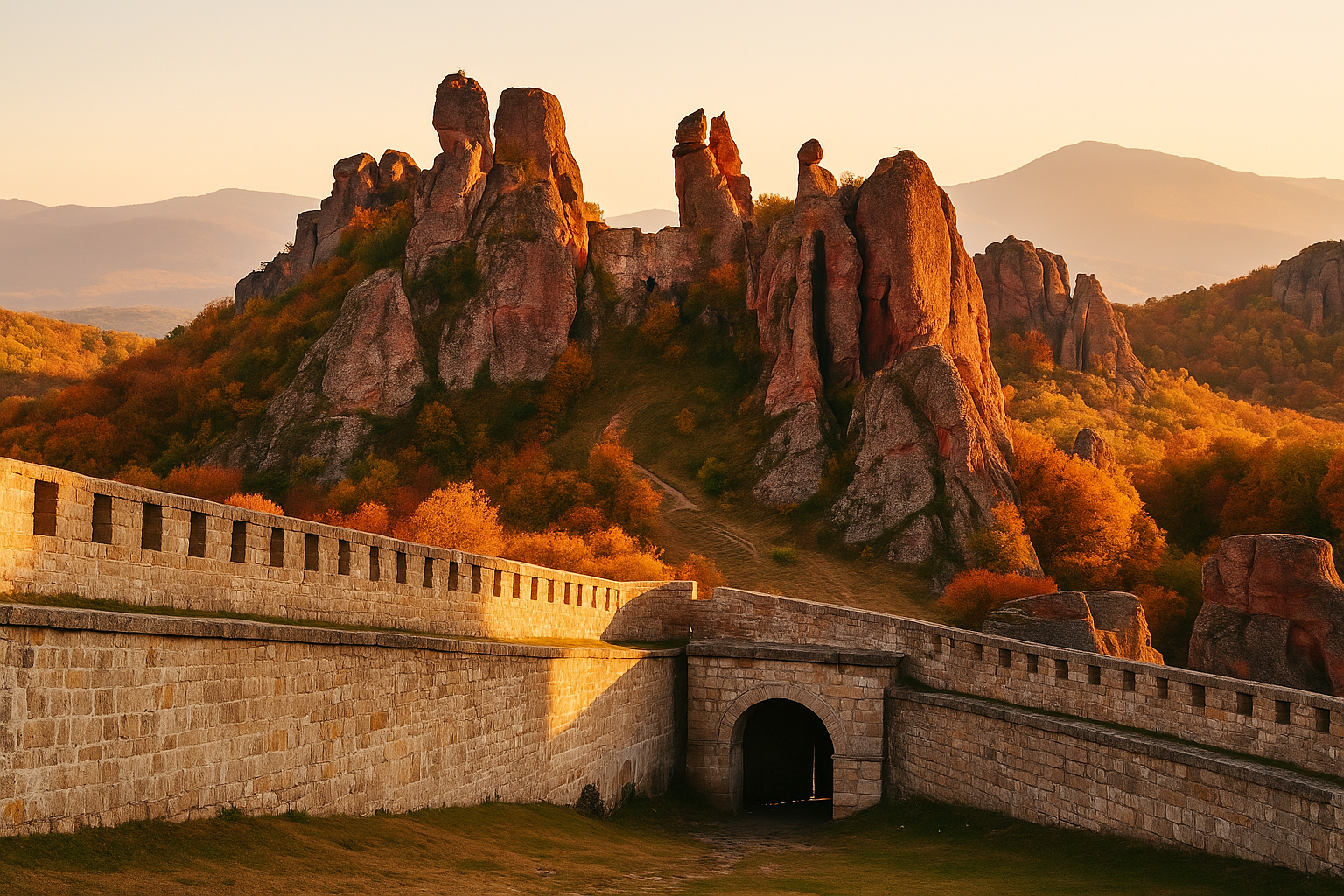
Belogradchik Rocks are an arena of red sandstone and conglomerate pillars and cliffs on the slopes of the western Balkan Mountains in north‑west Bulgaria. Shaped over millions of years, the formations stand up to about 200 m high and cluster around the small town of Belogradchik, creating a dramatic, surprisingly intimate landscape that rewards a short detour from main roads.
A field of red sandstone towers rises like a stone city — locals still point out figures such as <strong>Adam and Eve</strong> and the <strong>Monks</strong> carved by wind and time.
What You'll See
The scale is human and monumental at once: cone and tower silhouettes, narrow passages, flat ledges and sheer walls. Colours range from warm rust and ochre in summer to softer rose and grey in low light; after rain the stone darkens and the air smells of pine and earth. Early morning and late afternoon light deepen shadows and reveal the carved shapes that gave the rocks their folk names.
Best-known Rocks
Belogradchik Fortress (Kaleto)
Belogradchik Fortress (Kaleto) perches within the rock field and has layers of history: founded in Roman times, enlarged in the 14th century and altered during Ottoman rule. Its ramparts and towers are integrated with the natural formations, and the main viewpoint gives an excellent panorama over the scattered pillars and the town below. The fortress is visitor-friendly but check seasonal opening hours before you travel.
Nearby Caves
Nearby caves add a subterranean contrast. Magura Cave is famous for prehistoric paintings and a cool, echoing interior; the site includes a small display and a rustic wine cellar where local vintages are sometimes offered. Venetsa Cave is smaller and quieter, a good option if you prefer a short, less touristy visit. Both caves pair naturally with a day at the rocks.
Getting There
From Sofia the drive is a long day trip across the mountains; expect several hours by car or bus. From Vidin the rocks are a short, convenient drive and make an easy half‑day or full‑day outing. Local roads are straightforward but narrower than highways; public transport reaches Belogradchik but schedules are infrequent, so plan connections in advance.